
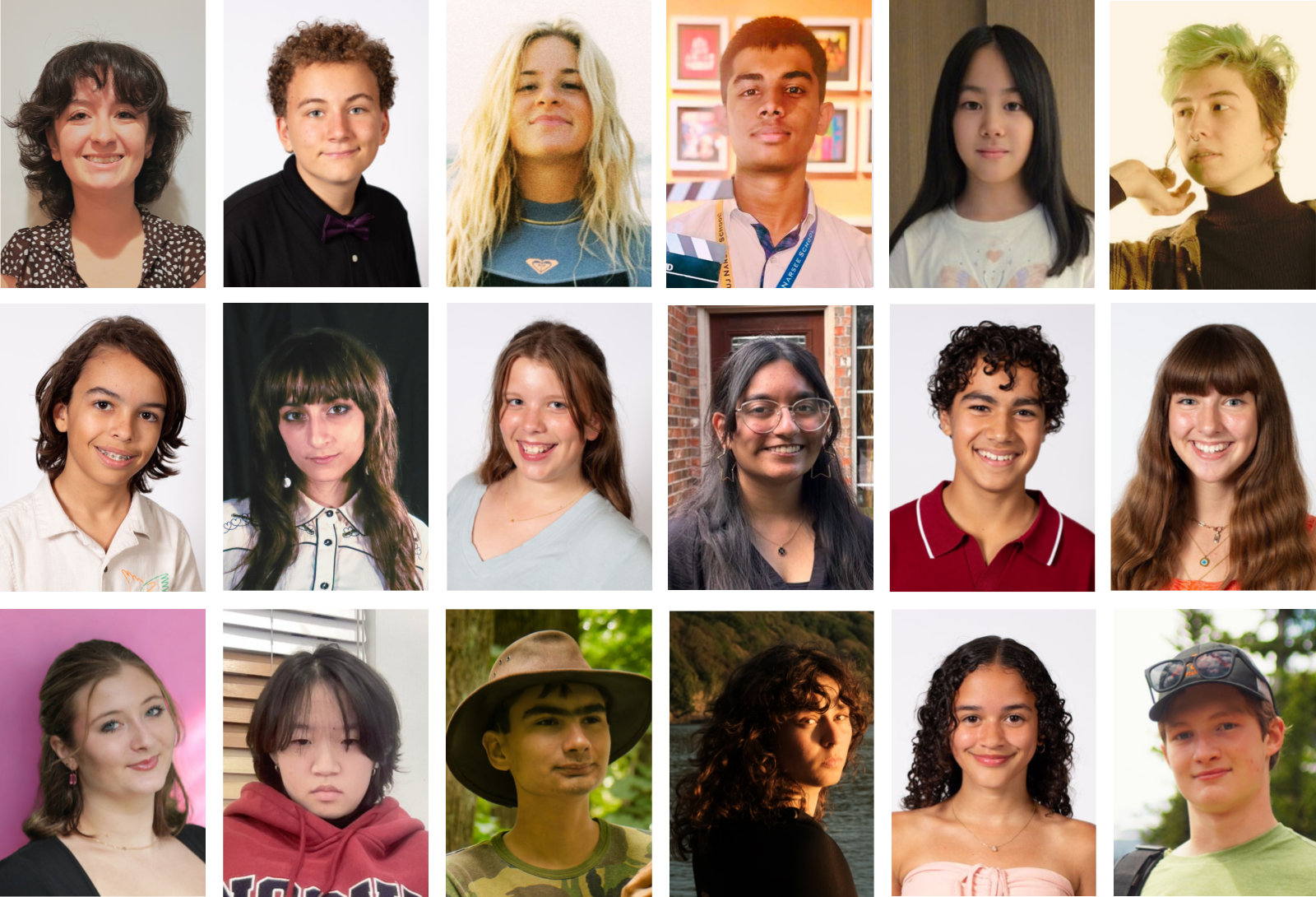
Among the winners (including groups pictured below) are, top row from left, Olivia Nathanson (Browsing for a Solution, California), William Peterson (Generating Our Future, Illinois), Natascha Donhauser (Hidden Forests, Germany), Aarohan Kundu (One More Plate, India), Audrey He-Qing Cheng (Chirp Talker, Taiwan), Elliot Witkowski (You’re a Part of Me, Poland). Middle row from left, Otto Bruner (Generating Our Future, Illinois), Giuliana Capriccioso (Pachamama, Argentina), Amelia Richards (Generating Our Future, Illinois), Zaina Quadri (To the Core, Texas), Indra Mallik (Generating Our Future, Illinois), Holly Murphy (Generating Our Future, Illinois). Bottom row from left, Allie Mello (Browsing for a Solution, California), Yeryung Son (I’ll Handle It, South Korea), Arthur Cech (The Threat of Deforestation, Guinea), Justine Wiedemann (Hidden Forests, Germany), Jasmine Dola (Generating Our Future, Illinois), and Brendan Buist-Sohn (Browsing for a Solution, California).
By Lisa Biehle Files
Travel to Earth’s core, listen to an AI bird translator, discover goats preventing forest fires, and more. View all 10 winning short films from the One Earth Young Filmmakers Contest at 10 a.m. Sunday, Sept. 27, in person at Davis Theater, 4614 N. Lincoln Ave. in Chicago, or online virtually anywhere in the world. Be ready to stretch your imagination and expand your understanding of going green. A special online screening for those in Asia/Pacific will also be available.
This year, the One Earth Young Filmmakers Contest (OEYFC) received a record 428 submissions from around the world. What started back in 2013 as a local Illinois contest with a small number of submissions, has since expanded to a global contest, with this year’s entries spanning 58 countries and 35 U.S. states.
Every year, students between the ages of 8 to 25 submit short films (under 8 minutes) that inspire environmental change or action. This year, we received films about climate change, ocean waste, habitat loss, as well as a new topic: the growing environmental impact of artificial intelligence (AI), both in daily life and in the filmmaking creative process.
“As an environmental film contest, we have to be cognizant of the explosive increase in energy use and the precious water wasted cooling down data centers,” explains One Earth Young Filmmakers Contest Founder Sue Crothers. “This has raised all kinds of questions for us. Thankfully, some of our winning films address these very issues.”
A jury comprised of 31 film professionals and environmental leaders volunteered their time to review and give feedback on this year's bountiful submissions. Among the top ten winning films are animation and live action from as close as Oak Park, Illinois, to as far as Mumbai, India. And the winners are:
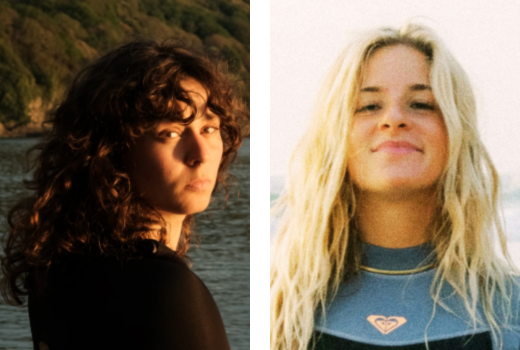
Justine Wiedemann and Natascha Donhauser
POST-GRAD AWARD
“Hidden Forests” (7 min)
$1,000 + $1,000 matching gift
donated to Kelp Ark
NATASCHA DONHAUSER and JUSTINE WIEDEMANN
Graduates, University of Applied Sciences
Schwäbisch Gmünd, Germany
The pace of life slows in this meditative, underwater exploration of swaying plants and sea life in the English Channel. Natascha films Justine at close range off the southern coast of the United Kingdom while she snorkels past kelp forest, crab, fish, shark, anemone and hundreds of minnows.
As she reverently focuses on the abundant plant and marine life beneath the water, Natascha narrates, saying this is one of the most biodiverse and compromised ecosystems on the planet. Kelp forests are far less known than tropical rainforests and coral reefs. They capture carbon, but because of pollution, unsustainable fishing methods, and warming sea temperatures, these underwater forests are in jeopardy, with close to 90 percent at risk in some areas.
“Something we can’t see is holding us together,” she laments, helping viewers understand the crucial importance of protecting these “hidden forests.”

Yeryung Son
SALLY STOVALL AWARD FOR CREATIVITY
“I’ll Handle It” (6 min)
$1,000 scholarship + $1,000 matching gift
donated to Environmental Law & Policy Center
YERYUNG SON
Junior, Fayston Preparatory
Suji, South Korea
(starting senior year)
Yeryung takes a first-person perspective in her film, showing last-minute stress as she attempts to create an entry for an environmental film contest. As her mother nags about the contest deadline, Yeryung uses ChatGPT to brainstorm topics. We see the text of her online conversation while she and ChatGPT bounce ideas back and forth.
Ironically, Yeryung then considers the environmental impact of using Artificial Intelligence to help her create a film about the environment. She asks ChatGPT questions about its energy and water usage and what would happen if all films were made entirely with AI in the future.
In her submission to One Earth Young Filmmakers Contest, Yeryung writes: “I want people to realize how little time we have left to save the planet. The influence of AI has already passed the limits set by humans. We must learn how to use it for the benefit of our planet and the people, and not for drying up our resources and undermining creativity.”
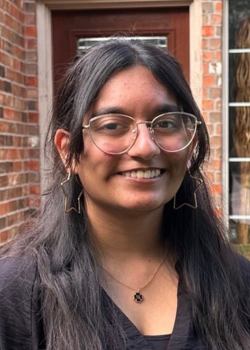
Zaina Quadri
UNIVERSITY/COLLEGE AWARD
“To the Core” (3 min)
$1,000 scholarship + $1,000 matching gift
donated to Earthjustice
ZAINA QUADRI
Senior, Seven Lakes High School
Katy, Texas
(starting freshman year at University of Texas at San Antonio)
Although the University/College Award usually goes to a live action film, this year an animation won out. To the Core takes place in the future with an environmentally damaged Earth, which humans have abandoned in favor of Mars. Eddie the astronaut visits the abandoned planet, falling into a hole that leads to Earth’s core. There, a humorous yet serious conversation ensues between Eddie and the Earth, personified as our planet's real-life inner core with a scolding, motherly attitude. And she has something to say: Earth feels abandoned by humans who left her surface for Mars. “Nothing was ever enough. You just kept taking. All that innocent life you destroyed,” she complains.
In Zaina’s contest submission, she writes, “. . . I made this film to express my environmental concerns. So, like any other normal person, I took Earth's giant planet core and made her able to scold humans about climate change. Because what better way to get people to take care of the planet than getting it straight from the source?” She hopes to remind others that our planet and the life on it are irreplaceable.
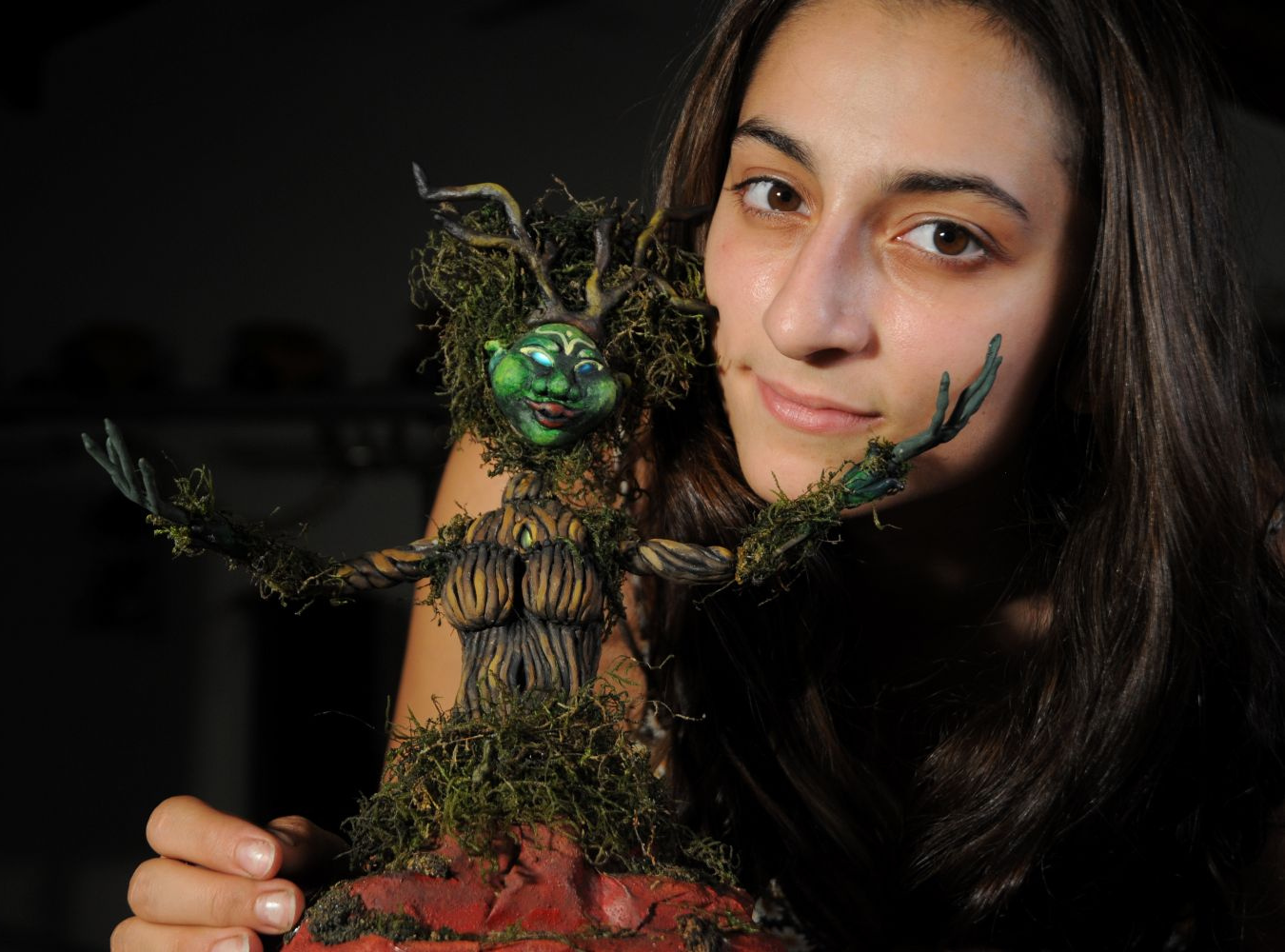
Giuliana Capriccioso with Pachamama
ANIMATION AWARD TIE
“Pachamama” (5.5 min)
$500 + $500 matching gift
donated to The Nature Conservancy
GIULIANA CAPRICCIOSO
Graduate, Universidad del Cine
Buenos Aries, Argentina
Andean traditions of northwestern Argentina refer to Mother Earth as “Pachamama.” She is the star in this stop-motion film about creation and destruction. At the top of a mountain, Pachamama sits, magically spreading green plants, blue rivers, and silver rain with the wave of her arms.
Then all turns to drought after human interference and increased waste. Two llamas even melt because of increasing temperatures. The music by Julian Ladjet pays homage to traditional Andean folk music and aligns perfectly with the shifting moods from joy to sadness to hope.
“I am submitting this project to share its environmental message with a wider audience and to contribute to awareness through animation,” writes Giuliana in her submission.
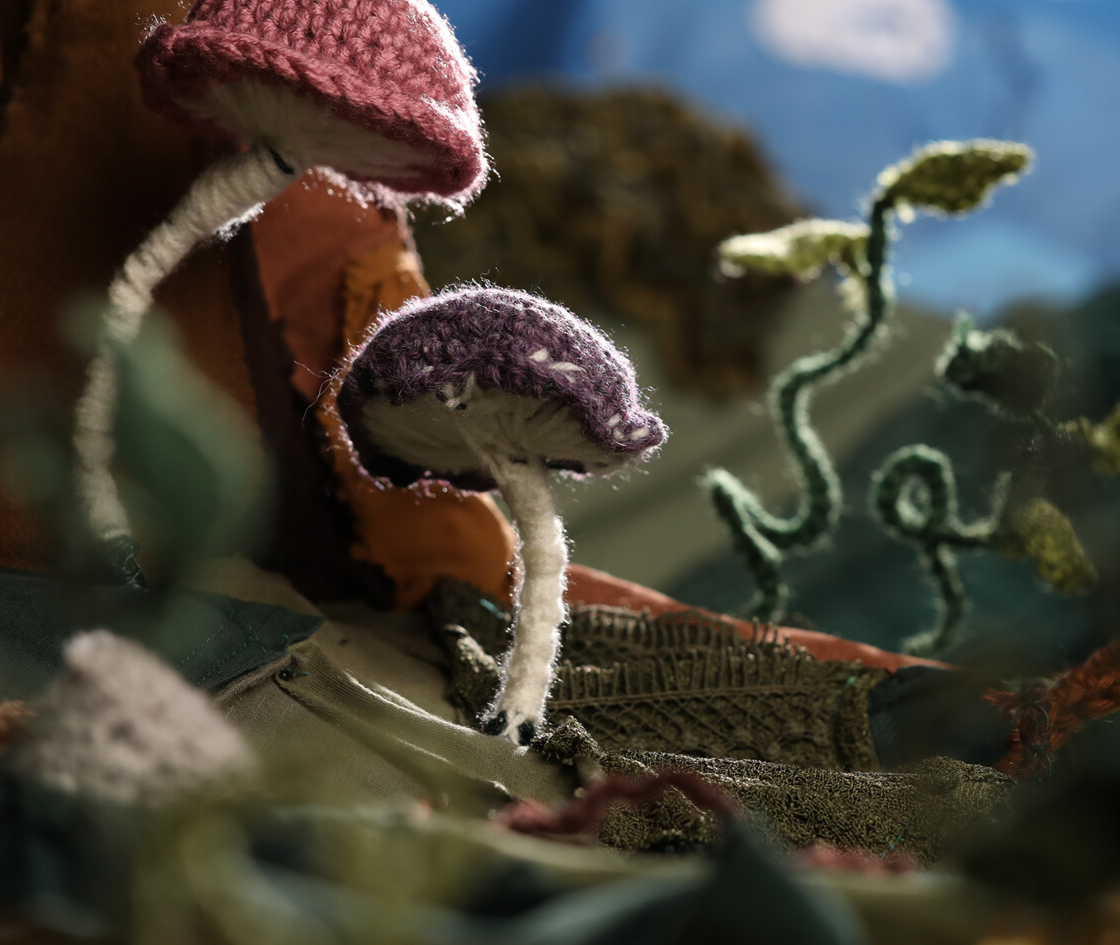
The crocheted landscape created by Elliot Witkoswki for their stop-motion film “You’re a Part of Me.”
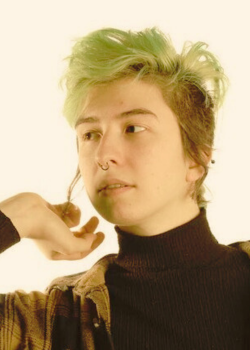
Elliot Witkowski
ANIMATION AWARD TIE
“You’re a Part of Me” (3 min)
$500 + $500 matching gift
donated to West Cook Wild Ones
ELLIOT WITKOWSKI
Graduate, University of the Arts Poznań, Poland
Poznań, Poland
Elliot created a woodland scene by crocheting plants and animals that transform and grow in this stop-motion film. A worm/snake becomes a flower, which becomes a berry. A human hand picks the berry, eats it, and leaves the shell from which the entire cycle repeats, but with a different outcome. Meanwhile, the soundtrack of quivering flute music gives the sense of nature’s beauty and sanctity.
“People in modern times tend to separate themselves from Nature, placing themselves above it, thinking that we control it and it should serve us as a resource. I don't think that should be the case. I wanted to show the dependent relationship between humanity and Nature, how we create one big system along with every living thing on the planet,” writes Elliot.
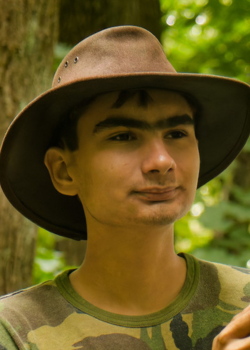
Arthur Cech
ENVIRONMENTAL ACTIVISM AWARD
sponsored by JANE GOODALL INSTITUTE
“The Threat of Deforestation” (5 min)
$500
ARTHUR ČECH
Junior, Homeschool High School
From Europe originally (French-Czech-Dutch)
and traveling in Africa
(starting senior year) www.arthurcech.com
Traveling throughout Africa in a truck with his parents and siblings has enabled Arthur to focus on his passions of photography and filmmaking. In The Threat of Deforestation, he provides sweeping views of Moyen-Bafing National Park in the Fouta Djallon region of Guinea, as well as close-ups of its inhabitants, both human and chimpanzee. Arthur focuses his film on pervasive deforestation and potential solutions.
In fact, Moyen-Bafing National Park protects the world's largest remaining population of the West African chimpanzee, listed as Critically Endangered. They are losing habitat, but they plant trees naturally by excreting seeds after eating. “They are working for us,” explains Col. Kevin Mbamba of Moyen Bafing Offset Project. “. . . if we need trees to survive and someone is planting them for us, the least we can do is protect them.”
Moyen Bafing Offset Project helps to conserve the park's biodiversity and chimpanzees, in particular. It also encourages community residents to replant trees to replace those cut down for firewood and construction. "When people replant, they understand that these trees represent a future for themselves and for their children," says Mbamba.
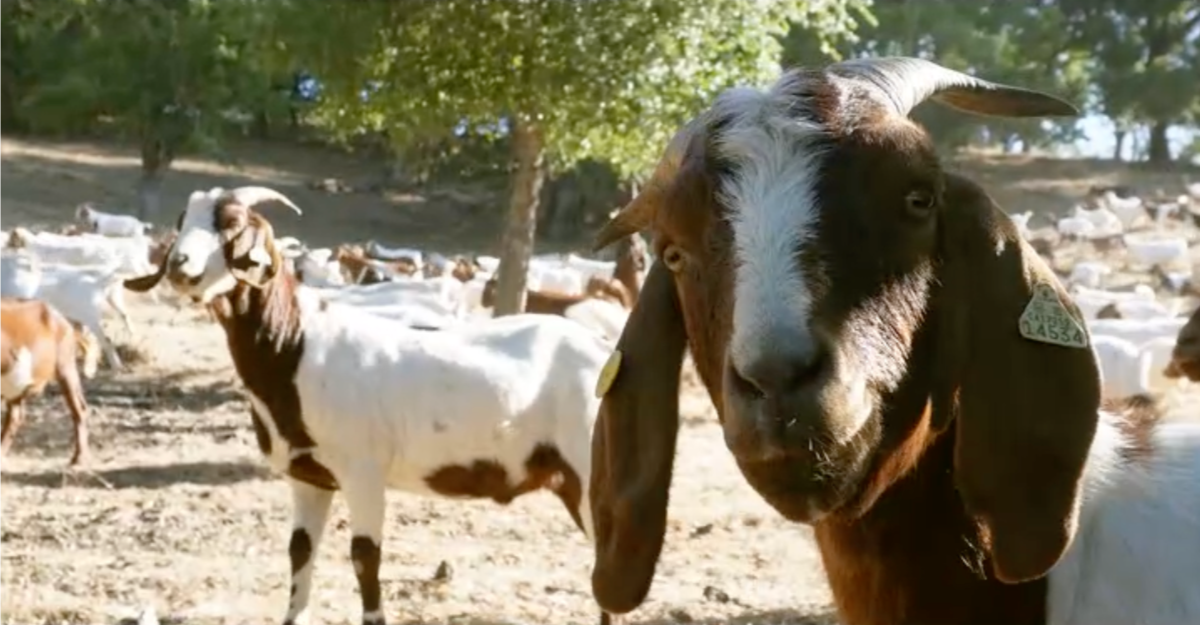
Curious goats help San Domenico School prevent forest fires in California.
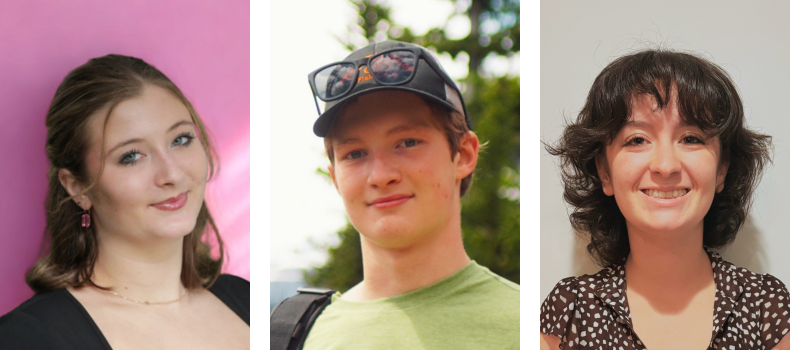
Allie Mello, Brendan Buist-Sohn, and Olivia Nathanson
HIGH SCHOOL AWARD
“Browsing for a New Solution”
(5 min)
$350 + $350 matching gift
donated to The Wildfire Foundation
BRENDAN BUIST-SOHN,
ALLIE MELLO,
OLIVIA NATHANSON
Sophomores, San Domenico School
San Anselmo, California
(starting junior year)
Can 400 goats browsing on an adjacent hillside help protect a school from wildfire? Apparently, the answer is, “Yes.” Groundskeeper Terry Hoy at San Domenico School explains why these adorable animals mitigate fire risk. “They eat down grass, brush, leaves and things that would be fuel for fire, making this a safer place to be during fire season. Plus, having goats on campus is just kind of cute. It’s kind of an interesting look.”
The three high school filmmakers intersperse statistics about increasing California wildfires with playful editing of curious goats gazing into the camera at close range. Hoy elaborates, “The goats are not going to end the risk and danger of a fire, but they will certainly make it less likely to spread and easier to contain.”
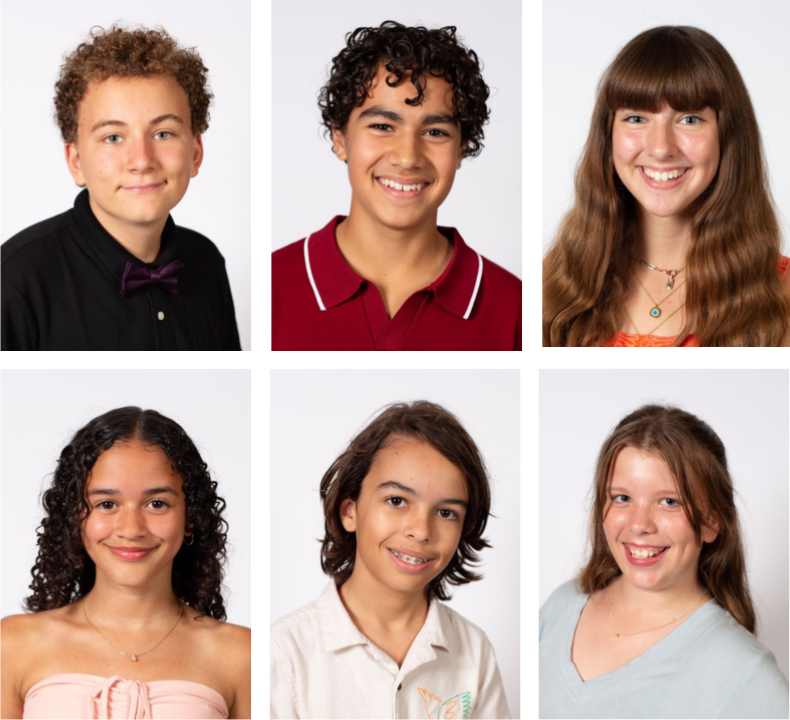
From top left, William Peterson, Indra Mallik, and Holly Murphy. From bottom left, Jasmine Dola, Otto Bruner, and Amelia Richards, all filmmakers for “Generating Our Future.”
ENVIRONMENTAL ACTIVISM AWARD (LOCAL)
sponsored by
FOOD & WATER WATCH
“Generating Our Future” (8 min)
$500
HOLLY MURPHY, INDRA MALLIK, AMELIA RICHARDS, JASMINE DOLA, OTTO BRUNER, and WILLIAM PETERSON
Grade 8, The Children’s School
Oak Park, Illinois
(starting freshman year)
Six local middle school students highlight the problems caused by burgeoning data centers near the Great Lakes. Currently, 847 data centers use approximately 60 million gallons of water daily.
Usually, water is pumped through a membrane to cool the data center server rooms. More than 50% of this water evaporates without returning to the water supply. Most data centers connect to municipal water supplies and are not required by the state to disclose their water usage.
Says the narrator, “The Great Lakes are a crucial resource and we all have the responsibility to preserve them for generations to come.”
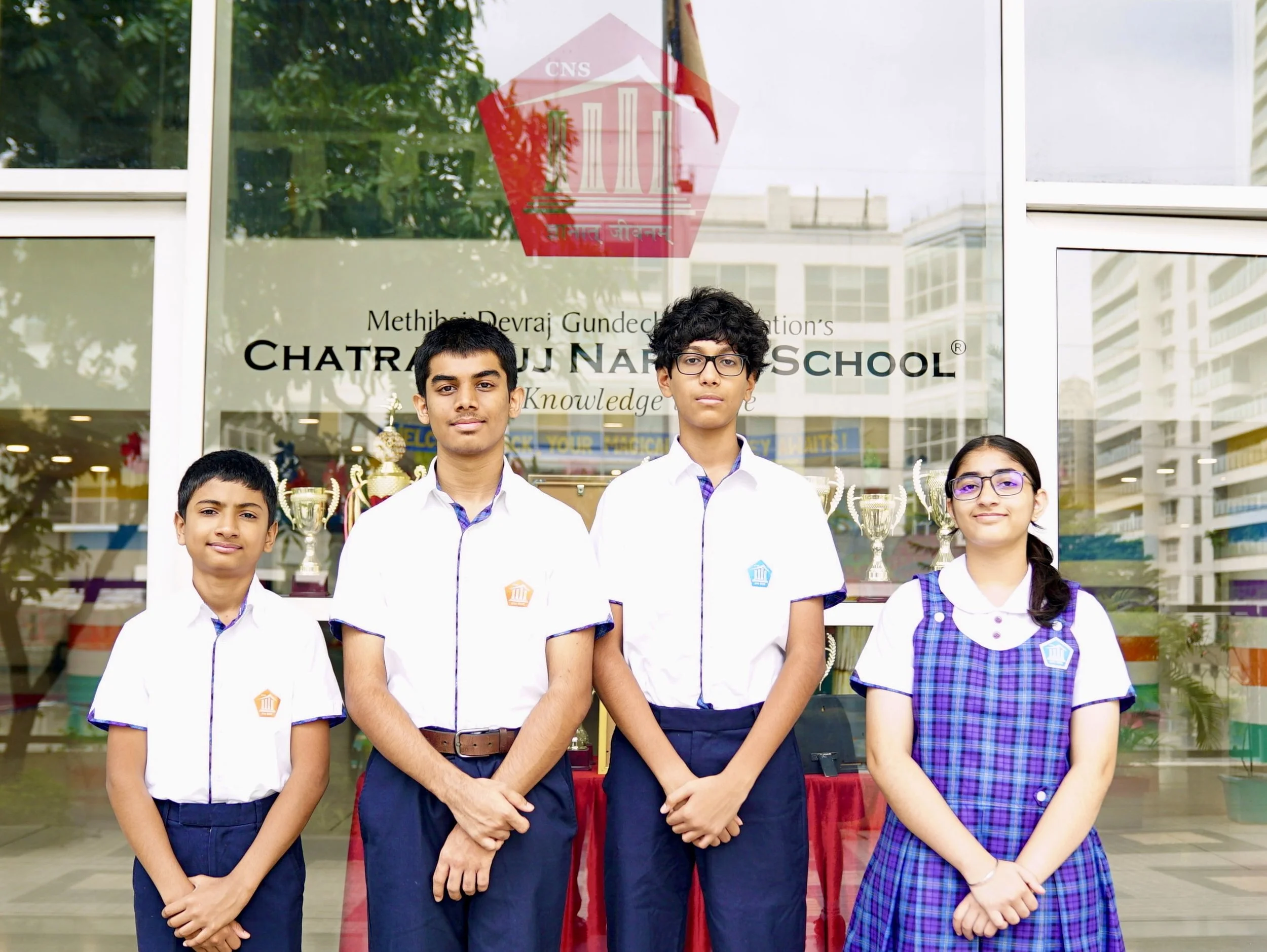
From left, Mohammad Umar Khan, Aarohan Kundu, Shaurya Patil, and Sammaira Nagar created “One More Plate.”
MIDDLE SCHOOL AWARD
“One More Plate” (4.5 min)
$200 + $200 matching gift
donated to Food & Water Watch
AAROHAN KUNDU, director, with SHAURYA PATIL, SAMMAIRA NAGAR, and MOHAMMAD UMAR KHAN
Grade 8, Chatrabhuj Narsee School, Mumbai, India
(starting freshman year)
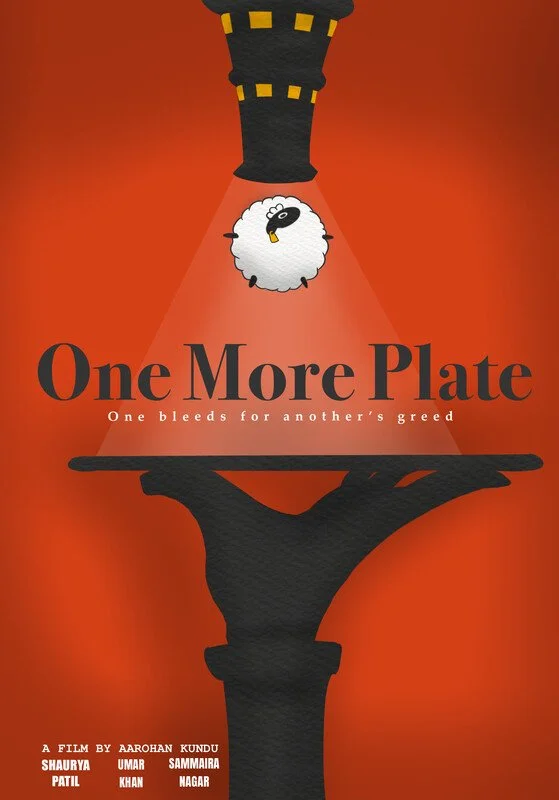
This animated film is a strong critique of factory farming. Instead of allowing sheep to graze and be preyed upon by wolves, an industrial pipe descends from the sky to fatten sheep for human consumption and eliminate wolves. Fed fodder and chemicals, the sheep become part of the high-volume food supply. Original songs by the filmmakers and well-matched soundtrack reinforce the film’s message, raising questions about the ethics of our food systems.
Aarohan writes in his team’s submission, “What inspired me to make this film was how inhumane the food industry has become. . . . I am aware that the demand for food is ever-growing, but surely there must be some other alternative where both us and them [humans and animals] can co-exist?”
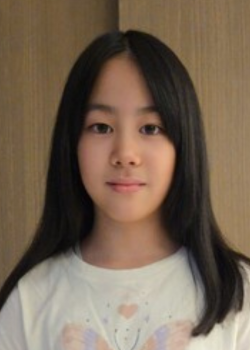
Audrey He-Qing Cheng
ELEMENTARY SCHOOL AWARD
“Chirp Talker” (4.5 min)
$100 + $100 matching gift
donated to Illinois Audubon Society
AUDREY HE-QING CHENG, director, with
CHIEN-YU LIN, MATT SU, SHAN TSAI, LILY TSAI,
and SING CHOU
Grade 5, National Taipei University of
Education Experimental Elementary School
Taipei, Taiwan
(starting Grade 6)
This charming stop-motion film is made from cut-out colored pencil and crayon drawings with painted backgrounds. Audrey voices the main character, a young girl who lives in a crowded city, but enjoys watching the birds who rest on her balcony to sing. She wants to decipher their language and so invents an AI translator.
At first, the translator seems to work—the birds ask for toast. But it turns out to be a misunderstanding: what they truly need is more habitat. There are too few trees in the city, and so an insufficient supply of bugs to eat and branches for homes. The little girl adds more plants to her balcony to help solve this problem.
Audrey concludes, "Every living thing has a voice. If we just stop and listen, the world can be such a better place."
Thank you to our jury of 31 experts in sustainability and film.
Learn more here.
The call for entries will open again after our Global Awards Celebration in late September. Visit Contest Details or our Film Freeway page here.
Go here to learn more about this year's 7 Honorable Mention Films:
Post-Grad Animation
“Riehpovuotna - Repparfjorden,” by Claire Baumgarth, France (from Norway)
“Ranger Dave Enjoys a Quiet Evening,” by Sarah Campbell, Georgia
“A Tiger’s Qualms,” by Ryan Justino, Indonesia
University Animation
“Kaalindi: An Urban Legend,” by Saloni Dhingra, India
“Raiz,” by Stella Salvadego, New York (from Brazil)
High School
“Gadgets and Droids,” by Teagan Fortier, Illinois
Middle School
“Bogota in Motion,” by Gabriela Cortes, Florida