
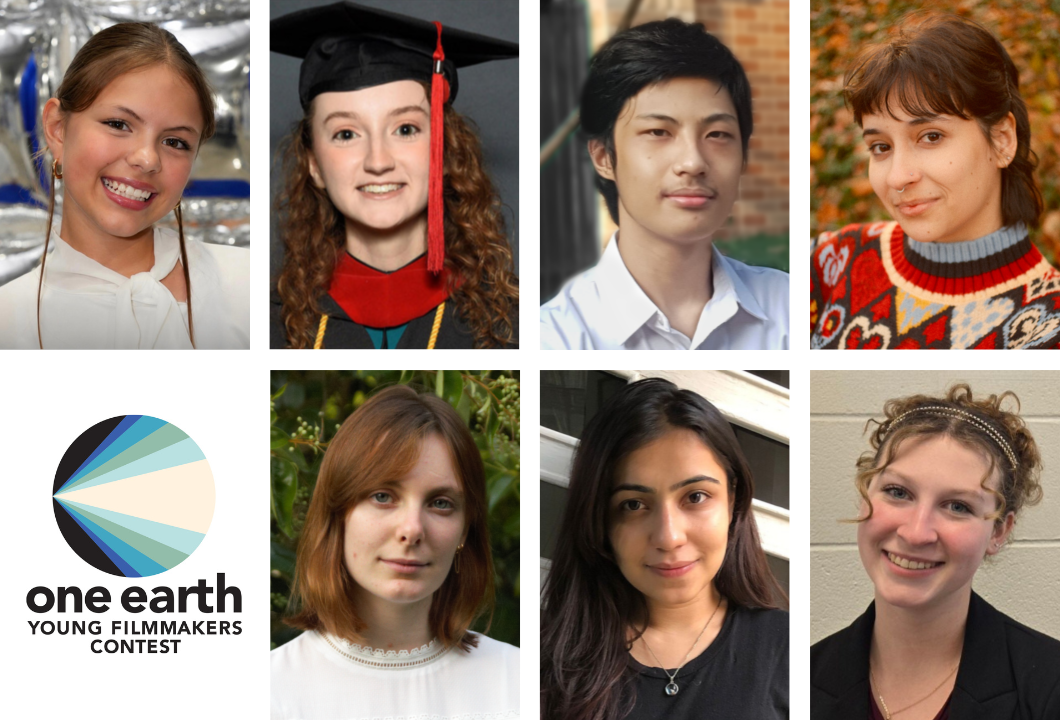
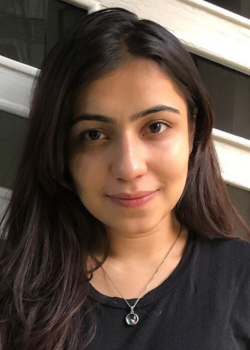
From top left, Gabriela Cortes (Bogotá in Motion, Columbia/Florida), Sara Via (Ranger Dave Enjoys a Quiet Evening, Georgia), Ryan Justino (A Tiger’s Qualms, Indonesia), and Stella Salvadego (Raiz, Brazil/New York). From bottom left, Claire Baumgarth (Riehpovuotna—Repparfjorden, Norway/France), Saloni Dhingra (Kaalindi: An Urban Legend, India), and Teagan Fortier (Gadgets and Droids, Illinois).
By Lisa Biehle Files
Travel the world visually from the rainforests of Brazil to the streets of Bogota, from the Yamuna River in Delhi to the island of Sumatra, from the fjords of Norway to the beaches of Savannah and beyond to learn about conservation, reducing waste, and specific steps each person can take to save the planet. Tickets are free, but registration is required to receive the link.
The Young Filmmakers Contest celebration started in September with a screening of the top 10 winning films and will continue with an exclusive virtual screening of all seven Honorable Mention films on Saturday, Oct. 24. This is a chance to see these stories in their entirety and support these young filmmakers whose films were just a hair’s breadth away from a top prize. Learn more about Honorable Mention winning films below.
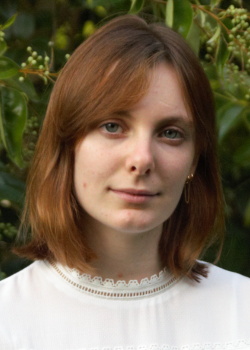
Claire Baumgarth
RIEHPOVUOTNA—REPPARFJORDEN (3.5 min)
Claire Baumgarth
Post Grad Level
Animation
Institut Sainte-Genevieve
Paris, France (from Norway originally)
Claire tells a story of environmental injustice via watercolor, pastel drawings and paper cutouts in this stop-motion film. The indigenous Sami people of northern Scandinavia protest Blue Metals mining company’s copper extraction in lands that should be protected. Norway has allowed disposal of mining waste in the seabed, which impacts entire local ecosystems, fishing and herding. Interviews, drumming and subtle music are layered with Claire’s colorful illustrations.
“Such ecological and social disasters must end now,” urges Claire, who is from Norway originally. “I want to bring awareness and help the fight for the protection of Indigenous people’s land as much as I can with the tools I have as a student documentary film director.”

Sarah Campbell Via
RANGER DAVE ENJOYS A QUIET EVENING (3 min)
Sarah Campbell Via
Post Grad Level
Animation
Savannah College of Art and Design
Savannah, Georgia
A park ranger quietly observes wildlife at the beach in the evening as stars glisten and soft piano music plays. Suddenly, the peaceful scene is loudly interrupted by a drunkard on a motorized off-road vehicle. The soundtrack switches to electric guitar and the park ranger becomes a superhero, wielding his pen as the ultimate weapon, writing an expensive citation.

Sarah explained in her contest submission: “Living in Savannah [Georgia] for the last several years, I wanted to showcase a side of conservation which is often overlooked in favor of forests: the beach! Anywhere water meets the earth is vitally important habitat for conservation, but with so many stories of people behaving disrespectfully to nature on nearby beaches, this animation became an important message for me. I hope this film can inspire more people to protect our beaches and estuaries!”
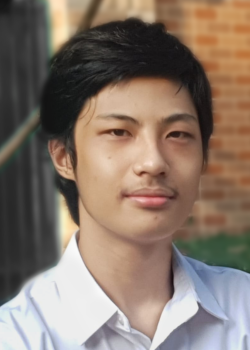
Ryan Justino
A TIGER’S QUALMS (7.5 min)
Ryan Justino
Post Grad Level
Animation
Bunda Mulia University
Jakarta, Indonesia
A hunter chases and kills a Sumatran tiger, but then magically transforms into a tiger himself and experiences life as a hunted feline. Soon he finds a cave for shelter with a tigress and her cubs. During the night, a young cub cuddles with the fatherly tiger, which reminds him of his days as a human with a young son. Upon waking, he finds himself back in human form again and escapes from the tigress’ cave. Then after, he gives himself up to be arrested for killing an endangered animal. This action helps him change in a surprise ending.
“I am a nature and animal enthusiast who supports wildlife conservation,” writes Ryan. “I believe every individual has a duty to keep the Earth sustainable no matter their background. As an animator, this film is my way of contributing towards the efforts of wildlife conservation.”
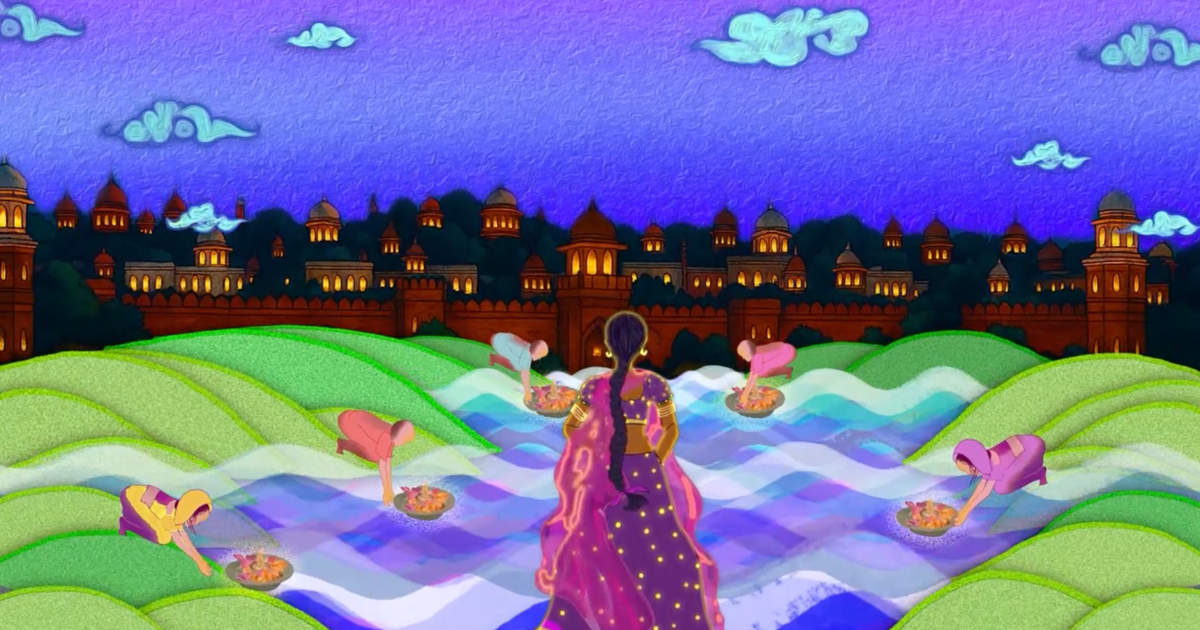
Kaalindi in the days when the Yamuna River in Delhi was respected, from the film ‘Kaalindi: An Urban Legend.’
Saloni Dhingra
KAALINDI: AN URBAN LEGEND (5 min)
Saloni Dhingra
University Level
Animation
Indian Institute of Art and Design
Delhi, India
Saloni’s beautiful animation tells the story of Kaalindi, a character inspired by the goddess Yamuna from mythology, folklore, and history. Kaalindi personifies the Yamuna River of Delhi, which is extremely polluted today.
In Saloni’s film, a young man takes a boat ride on the Yamuna and listens to an elderly woman tell the story of Kaalindi. With scenic architectural angles and gorgeous colors, she shows a time when Kaalindi (or the Yamuna river) was cherished and cared for by a king who lived on her banks. Then a new king greedily acquired her, and the people of Delhi abandoned her. But there is hope that she will one day be restored to dignity.
Muses Saloni in her submission: “This film represents my personal artistic response to the stories and landscapes that shape the city of Delhi and its forgotten connection with the Yamuna River.”
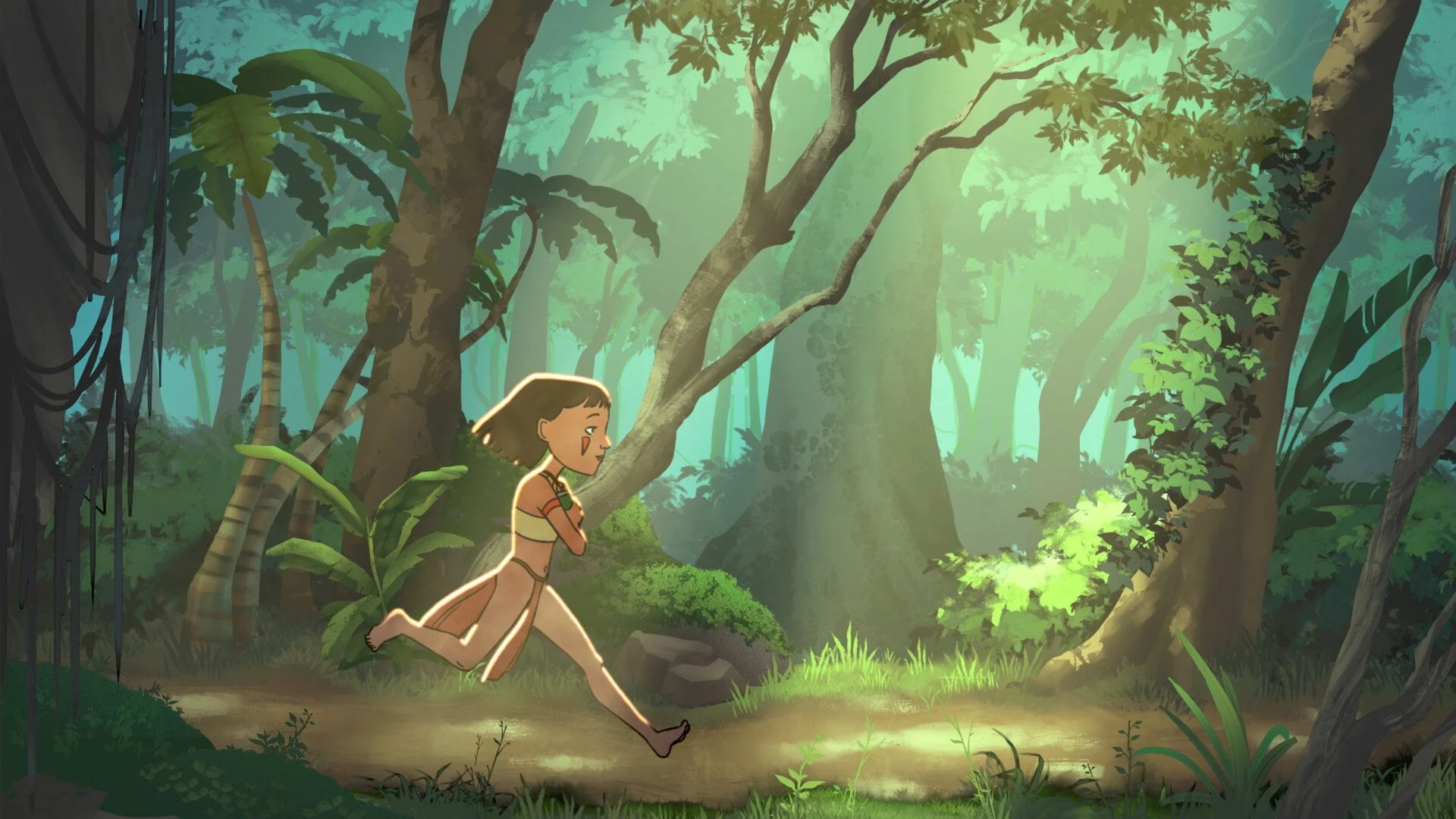
An Amazonian girl at home in the forests of Brazil in the film ‘Raiz,’ which means ‘Root’ in English.
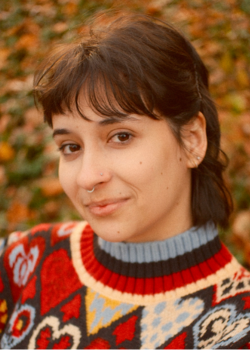
Stella Salvadego
RAIZ (4 min)
Stella Salvadego
University Level
Animation
School of Visual Arts
New York City, NY (from Brazil originally)
A young Amazonian girl encounters a sign of the world beyond the forest: a bright green can of soda. Fascinated, she plays with it until it partially explodes, leaving a remnant of sweet fizz to taste. She then explores the edge of the forest, only to find a logger drinking the same soda while removing trees with heavy equipment. This clash of two very different cultures ends with statistics: 27% of the Amazon was deforested between 1985 and 2020; Indigenous lands experienced a 3% loss, at most.
Film Director Stella, who is from Brazil originally, writes: “My primary motivation is to raise awareness about how civilization's contact with and destruction of native American lands is harmful not only to the environment but also to their culture. I hope to raise awareness about the violence happening against Indigenous tribes in the Amazon forest, as well as around the world.”

Teagan Fortier
GADGETS AND DROIDS (6 min)
Teagan Fortier
High School Level
Yorkville High School
Yorkville, Illinois
Teagan’s film combines her original poetry, music, and video from the Everglades to make an artistic statement about Artificial Intelligence. She starts out with, “You’ve probably heard the news, a familiar voice. AI is taking over; we have no choice.”
Teagan then underlines AI’s contamination and waste of freshwater resources. She encourages us to turn off our devices and engage with the natural world by using our own imaginations and brilliance.
For more solutions to AI's environmental impact, she suggests, in rhyme: “Implement a closed loop cooling system, monitor the data centers where we all fell victim.”
In her submission, she explains: “I wanted to communicate the effects AI is having on everything in our lives, environmental and internal, and to motivate others to stop using AI.”
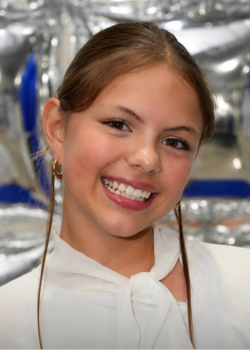
Gabriela Cortes
BOGOTA IN MOTION (8 min)
Gabriela Cortes
Middle School Level
Imagine Charter School
Weston, Florida
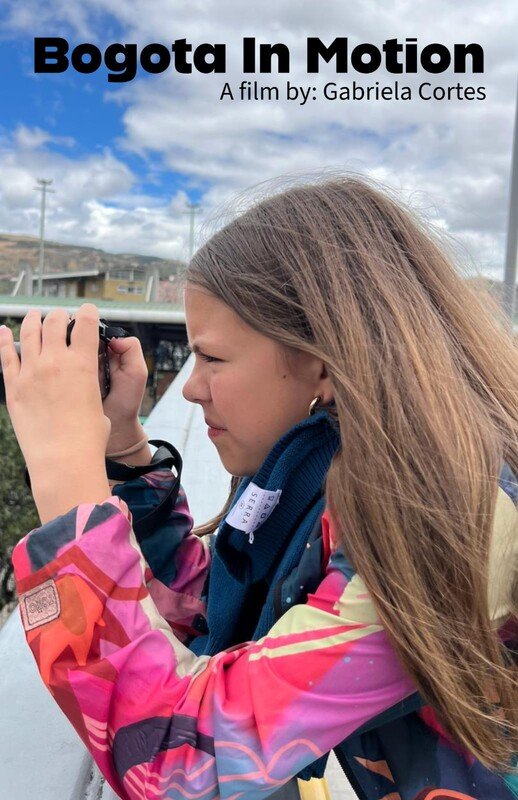
Gabriela investigates all forms of transportation in Bogotá, Columbia.
Gabriela demonstrates all the various forms of transportation in Bogotá, Colombia. For the past 30 years on Sundays from 7 a.m. to 2 p.m., people have had access to Ciclovia. That’s where about 75 miles of roads are closed to vehicles and opened for bikers, runners, skaters, and walkers.
The Trans Milenio is a heavily used Bus Rapid Transit that Gabriela tries. Bicycle taxis and electric cargo tricycles can help with the last mile of transport home. The TransMicable is an urban cable car/gondola lift that stretches about 2 miles across the city, carrying people high above the traffic.
Finally, Bogotá Metro, a new train system, is scheduled to open in 2028. With confidence and good cheer, Gabriela interviews people along each form of transportation, demonstrating the variety of choices for the more than 8 million people moving through the city of Bogotá each day.
One Earth Young Filmmakers Contest is grateful to the 31 leaders in film and/or environmental experts who served on our jury, narrowing down the strongest films from 428 submissions. Learn more about the jury here and be sure to get tickets for Oct. 24 online.
To read about the top winners, go here.