

By Patricia Sarmiento:
Digital habits feel invisible, but they carry real environmental weight. Every streamed video, stored file, and unused device quietly draws energy from data centers, power grids, and manufacturing supply chains. The good news is that small, deliberate changes at home and at work can measurably reduce your carbon footprint without sacrificing convenience or productivity. What follows is a practical path from awareness to action.
Key Points
Digital activity has a physical cost, driven by electricity use and hardware production.
Reducing data sprawl is often easier than upgrading hardware.
Many impactful changes take minutes, not months.
Individual choices scale quickly when applied at work.
Auditing habits once a year can lock in long-term gains.
Why Digital Habits Matter More Than You Think
The problem starts with scale. Billions of emails, cloud backups, and device refreshes compound into massive energy demand. The solution is not digital abstinence, but digital efficiency: using fewer resources to achieve the same outcomes. When devices run longer, storage is leaner, and software is chosen thoughtfully, the result is lower emissions with little friction added to daily life.
Smarter Device Use at Home and Work
Energy-saving settings are often overlooked because they are tucked away in menus. Enabling automatic sleep modes, reducing screen brightness, and powering down peripherals overnight can cut electricity use immediately. At work, shared printers, monitors, and conference equipment are frequent culprits of wasted energy when left on after hours. These small behavioral changes create a compounding effect across teams and households.
Here is a simple way to approach device optimization with intention:
Set laptops and desktops to sleep after 5–10 minutes of inactivity.
Use power strips to fully shut off multiple devices at once.
Avoid unnecessary external monitors when working on lightweight tasks.
Delay hardware upgrades unless performance issues are blocking real work.
Digitizing Documents Without Creating Digital Clutter
Replacing paper with digital files reduces waste, shipping emissions, and physical storage needs. Scanning important documents and organizing them into logical folders allows quick retrieval while avoiding reprints. Saving records as PDFs helps preserve formatting, reduce file size, and ensure long-term accessibility across devices. To stay organized, a PDF merging tool can combine related documents into a single file, reducing duplication and search time. Give this a try to lower both paper consumption and the hidden energy cost of bloated digital storage systems.
Choosing Software With a Lighter Footprint
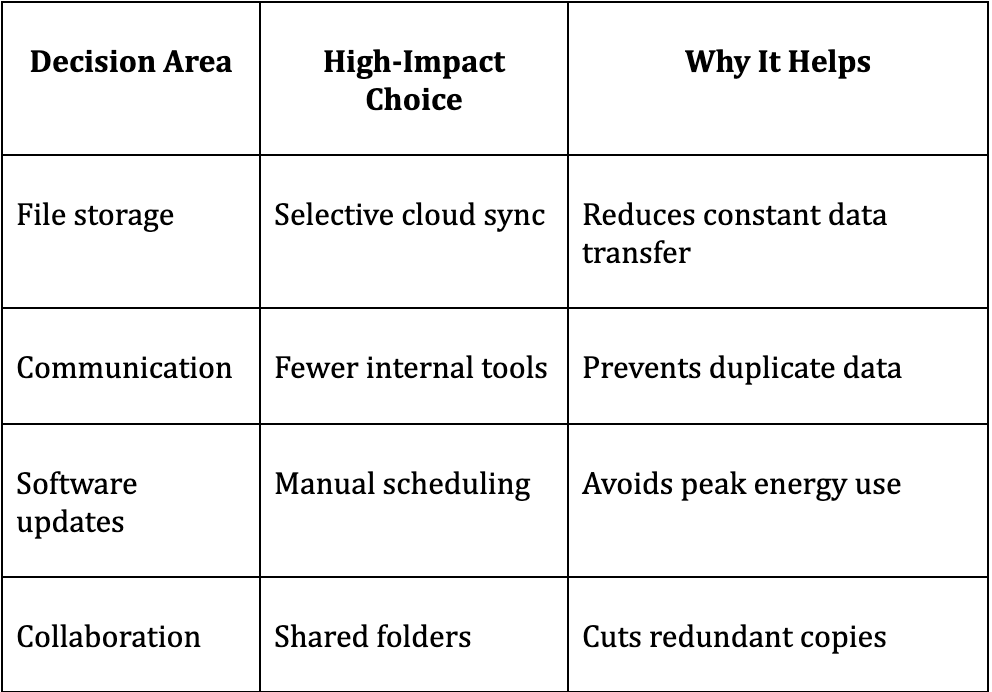
Not all software is equal in how efficiently it uses resources. Lightweight applications often perform the same core functions with less background processing and fewer automatic syncs. Cloud tools that allow selective syncing, rather than constant full backups, reduce data transfer and storage loads. At work, standardizing on fewer platforms also lowers redundant storage and idle accounts.
Before committing to new tools, it helps to compare options side by side.
Managing Digital Waste and Old Hardware
E-waste is one of the fastest-growing waste streams globally. Devices left in drawers represent both wasted materials and missed recycling opportunities. Responsible disposal starts with wiping data, donating usable equipment, and using certified recycling programs for end-of-life hardware. At work, centralized e-waste policies prevent ad hoc disposal and improve compliance.
Auditing Your Digital Footprint
This approach works equally well for individuals and small teams:
Review all connected devices and note which are rarely used.
Check cloud storage for duplicates, old backups, and forgotten folders.
Identify one device setting and one software habit to change this week.
Commit to extending the life of your current hardware by at least one year.
Everyday Digital Sustainability Questions
These answers address common concerns from people ready to act but unsure where to start.
Does deleting old files really make a difference?
Yes, because stored data consumes energy continuously through server maintenance and cooling. While a single file seems insignificant, accumulated data across millions of users creates substantial demand. Regular cleanup reduces long-term energy use without affecting daily workflows.
Is cloud storage worse than local storage?
Neither is inherently better in all cases. Cloud storage can be efficient when managed carefully, but constant syncing and redundant backups increase energy use. A balanced approach, using selective sync and local storage for archives, is often the most sustainable.
How often should I replace my devices?
As infrequently as possible without harming productivity or security. Manufacturing new devices carries a large carbon cost compared to using existing ones longer. Extending device life by even one year significantly reduces environmental impact.
Are energy-saving settings noticeable in daily use?
In most cases, no. Sleep modes and brightness adjustments rarely interfere with work when configured properly. The savings come quietly, without requiring ongoing effort.
What is the easiest change with immediate impact?
Reducing unnecessary data storage is usually the fastest win. Deleting unused files and disabling automatic backups can be done in minutes. These actions lower energy use almost instantly.
Should workplaces formalize digital sustainability policies?
Yes, because shared standards amplify individual effort. Clear guidelines reduce confusion and normalize responsible behavior. Over time, this creates measurable reductions in energy use and e-waste.
Closing Thoughts
Reducing your digital carbon footprint is less about radical change and more about mindful defaults. By optimizing device settings, trimming digital clutter, and handling hardware responsibly, you create immediate environmental benefits that scale over time. The most powerful step is committing to a few concrete changes today and revisiting them regularly. Digital sustainability works best when it becomes habit, not homework.