
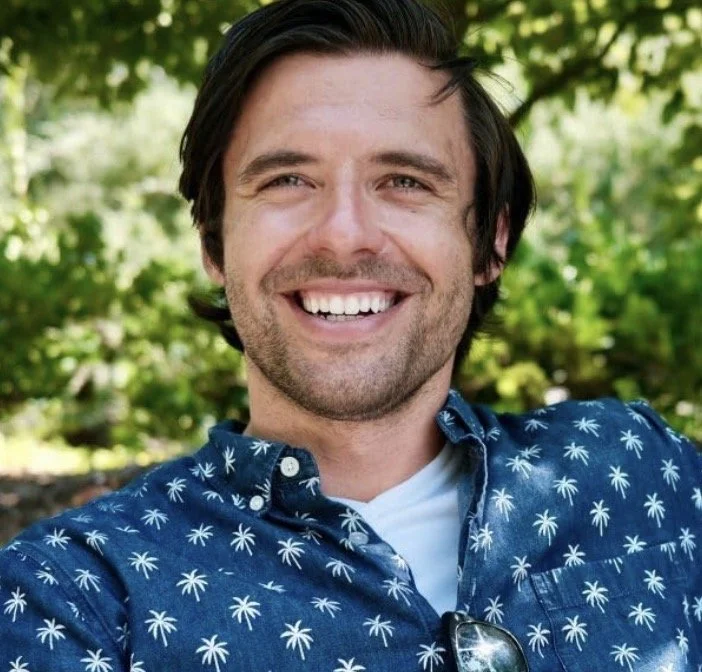
James Parker
One Earth(OE): What inspired the story behind In Our Nature?
James Parker(JP): This film journey began about a year and a half ago, when my co-producer Juliet Grable and I started paying attention to two trends we found hard to ignore. First, that kids were spending upwards of seven hours a day on screens - in some cases much more - and less than five minutes outside. And second, that nature and environmental education were increasingly being pulled into partisan debates.
That led us to a bigger question: what does the future look like if those trends continue? What happens in five, ten, fifty years if children are less connected to nature and, in turn, less connected to each other and to the systems that support life?
That question set us on an inquiry to better understand environmental education across the country and how different communities are working to expand access to it. What we found, pretty quickly, was something hopeful. That nature, and especially environmental education, can be one of our most powerful bridge builders and forces for community.
Yes, parts of this work intersect with complicated and sometimes polarized issues. But it’s also one of the few tools we have left that consistently brings people into shared space, shared understanding, and a shared sense of responsibility.
OE:How does the film show the relationship between people and the ecosystems they live in?
JP: One thing the film tries to do is move away from the idea that nature is something separate from us - or that it only looks a certain way, or is meant for a certain kind of person.
Instead, the film shows how closely tied our well-being is to the environments we’re part of, whether that’s in cities, rural communities, or somewhere in between. You see it in how access to nature impacts mental health, education, and opportunity. But you also see it in more personal ways, like how being outside can create space for reflection, for healing, and for connection. And what becomes clear is that this relationship is reciprocal. When people feel more connected to the places they live, they tend to care for them differently. That’s really where environmental education comes in - it helps build that connection, and with it, a deeper sense of responsibility.
OE: What does the concept of GenWe(intergenerational community working together) mean in the context of restoring nature?
JP: The environmental and social challenges we face are long-term and span generations. So restoring nature isn’t just about a single effort or a single group. It’s about creating spaces where knowledge, experience, and perspective can be shared across generations. Especially at a time when algorithms can sometimes get in the way of that kind of knowledge transfer and connection. Ultimately, restoring nature is also about restoring relationships - between people, between generations, and between people and the natural world.
