
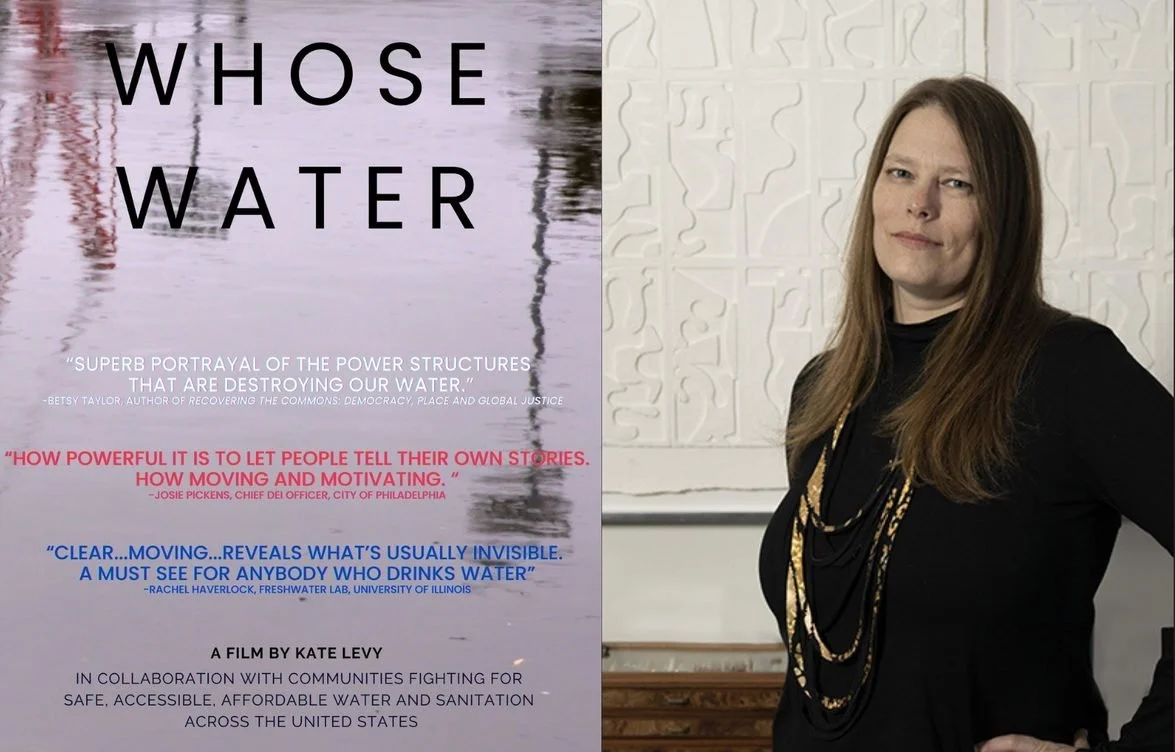
Film Poster for Whose Water? & Kate Levy
Water is life, but who controls it? Who gets access? And who is left behind? Whose Water? takes audiences inside frontline communities across the U.S. fighting for safe affordable water and exposes the systems that determine who has the power, and who doesn’t.
One Earth (OE): Water access is becoming one of the defining environmental issues of our time. What motivated you to explore this story in Whose Water?
Kate Levy (KL): In 2014, I began working with Flint activists to help expose high levels of lead in their water… residents were being labeled as pariahs. At the same time, I was documenting mass water shutoffs in Detroit. A few years later, advocates working toward federal legislation for the human right to water asked me to help tell stories from across the country. Because I had been documenting water issues alongside activists, I was able to explore how these crises are part of a larger system.
OE: How does Whose Water? reveal the intersection of environmental justice, community rights, and water policy?
KL: When the state displaced Flint’s locally elected officials and switched to a corrosive water source to cut costs, it showed how deeply water systems are tied to democratic power. That became the lens for the film: a community’s ability to govern itself is directly connected to its access to water. You see this play out in every location we visit. If you live in a city, ask: does your community have a water affordability program? If not, who’s working on it? In rural areas, look into who is protecting groundwater from pollution or industrial expansion. Across the country, communities are organizing through testing, legal action, and grassroots advocacy.
